
Cosmetic Product Testers: How to Choose the Right Testing Lab
What cosmetic product testers actually check, what FDA expects from your safety data, and how to pick a lab that can stand behind its results.
الفكرة الرئيسية
What cosmetic product testers actually check, what FDA expects from your safety data, and how to pick a lab that can stand behind its results.
If you make cosmetics, the safety file is on you. Cosmetic products and their ingredients do not require FDA premarket approval, with one exception: color additives, which must be approved by FDA for their intended use [3]. That means no regulator is checking your formula before it ships. The testing you commission — and the lab that runs it — is the whole safety story, and it is the evidence you will hand over if FDA ever comes asking.
Here is how to think like a buyer of cosmetic testing services, not a reader of marketing pages.
What you are legally responsible for
Under the FD&C Act, and expanded by the Modernization of Cosmetics Regulation Act of 2022 (MoCRA), cosmetics must not be adulterated or misbranded: they must be safe for consumers under labeled or customary conditions of use and properly labeled [4]. If you manufacture or market cosmetics, you carry the legal responsibility for the safety and labeling of those products [4].
A product is a cosmetic when it is intended for uses like cleansing the body, making a person more attractive, or changing appearance [4]. The FD&C Act defines cosmetics as articles intended to be rubbed, poured, sprinkled, or sprayed on, introduced into, or otherwise applied to the human body for cleansing, beautifying, promoting attractiveness, or altering appearance [2]. The moment you make a therapeutic claim — treating or preventing disease, or affecting the structure or function of the body — your product is regulated as a drug [2]. That changes your testing picture entirely, so nail down the intended use before you buy a single test.
You may also need to register your facility and list your products under MoCRA, though certain small businesses are exempted [4].
The substantiation standard your lab must meet
Here is the part most brands get wrong. FDA does not require specific tests to demonstrate the safety of individual cosmetic products or ingredients [4]. Instead, the manufacturer, packer, or distributor whose name appears on the label must ensure “adequate substantiation of safety” — defined as tests, studies, research, analyses, or other evidence that experts qualified by scientific training would consider sufficient to support a reasonable certainty that the product is safe [4]. You must also maintain records that support that substantiation [4].
So when a lab sells you “the standard cosmetic panel,” remember: there is no statutory panel [4]. What matters is whether the data package would convince a qualified expert your product is safe as used. A good cosmetic testing lab helps you build that argument, method by method, and can defend the methods if challenged.
What cosmetic product testers should actually be testing
When we talk to cosmetic brands about scope, the hazards that make a product adulterated are concrete and testable:
- Microbial contamination. Cosmetics are not required to be sterile, but microbial contamination can pose a health hazard and makes a product adulterated [4]. This is where microbiology testing — plate counts, preservative challenge testing, and pathogen screening — earns its keep.
- Prohibited and restricted ingredients. Violating the restrictions on specific substances makes a cosmetic adulterated [4]. A lab should screen your formula against the current prohibited and restricted lists.
- Color additive compliance. Misuse of color additives makes a product adulterated, and some color additive batches must be certified in FDA’s own labs [4].
- Contaminants. Unwanted substances can adulterate a product — for example, asbestos in talc-containing cosmetics [4]. Heavy metals and contaminant panels are not optional extras; they are part of a defensible safety file.
- Packaging. The composition of the container itself can make the contents injurious to health — the classic example is a lipstick in a container with lead coating [4].
Your tester should map each of these hazards to a method, a limit, and a result you can file. If they cannot, keep looking.
Why method quality and accreditation matter
Since FDA does not pre-approve cosmetics, enforcement happens after the fact [2]. FDA can pursue regulatory action when it has reliable information that a cosmetic is adulterated or misbranded — including action through the federal courts, restraining orders, seizure of the product, and criminal action [2]. Imports add another layer: imported cosmetics are subject to review at entry through U.S. Customs, and products that do not comply are subject to refusal of admission, destruction, or re-export [2].
That means your COA may be the only document standing between your product and a seizure. Ask any prospective lab how its methods are validated, how it handles out-of-specification results, and whether the specific methods you need sit inside its accredited scope. At Qalitex, when we scope a project for a cosmetic brand, we are explicit about which methods sit inside our accreditation scope and which fall outside it, because a blanket accreditation claim is exactly the kind of overstatement that falls apart under scrutiny.
A practical buying tip: ask for the method validation summary, not just the price list. A lab that cannot walk you through its validation data for, say, a preservative efficacy or heavy metals method is asking you to take its results on faith.
How to evaluate a cosmetic testing lab before you commit
Work through this checklist with any candidate lab:
- Regulatory framing first. Can they tell you whether your product is a cosmetic, a drug, or both, based on your claims? If they cannot, they are selling tests, not substantiation [2][4].
- Hazard mapping. Ask them to list which of the adulteration risks above their testing covers and which it does not [4].
- Methods, not menus. For each test, get the method number, the sample size, the reporting limit, and whether that method is within their accredited scope.
- Microbiology depth. Water activity, preservative challenge, and organism-specific screening matter more for a rinse-off product than a dry pressed powder. A good lab scopes testing to your product type, since microbial contamination is what makes a product adulterated [4].
- Stability data. Environmental factors like temperature, oxygen, moisture, and ultraviolet light affect product quality across manufacturing, storage, and distribution [5]. Ask how they design a stability protocol and what claims the data supports.
- Record retention. Since you must maintain records supporting safety substantiation [4], confirm the lab’s data package is complete enough to serve as your file — raw data, method references, and a defensible COA.
- Import awareness. If you import ingredients or finished goods, ask whether the lab supports entry compliance, since non-compliant products can be refused admission [2].
Avoid the traps
Two mistakes show up constantly. The first is conflating categories: a product that must be swallowed cannot be a dietary supplement, and conversely, a topical intended for cleansing or beautifying is a cosmetic [1][2]. Buy tests for the category you are actually in. The second is the “FDA approved” label. Some marketers claim it, but cosmetic products and ingredients do not require FDA approval, with the exception of color additives [3]. No testing lab can make your cosmetic “FDA approved” — and any lab that implies otherwise is misrepresenting how the regulatory system works [3].
The bottom line
You do not need a lab that promises everything. You need one that can tell you, precisely, what the law expects of your product — safety under labeled or customary conditions of use, proper labeling, and substantiation you can show on request [4] — which methods support that expectation, and where the limits of its own credentials lie. Come to your lab search with your claims settled, your hazard list drafted, and questions about validation and scope ready. The brands that get through FDA scrutiny are the ones whose safety files were built deliberately — one defensible result at a time [4].
Sources
- [1] Questions and Answers on Dietary Supplements | FDA (fda.gov, accessed 2026-10-19)
- [2] FDA Authority Over Cosmetics: How Cosmetics Are Not FDA-Approved, but Are FDA-Regulated | FDA (fda.gov, accessed 2026-10-19)
- [3] Is It Really ‘FDA Approved’? | FDA (fda.gov, accessed 2026-10-19)
- [4] Small Businesses & Homemade Cosmetics: Fact Sheet | FDA (fda.gov, accessed 2026-10-19)
- [5] Current regulatory guidelines and resources to support research of dietary supplements in the United States - PMC (pmc.ncbi.nlm.nih.gov, accessed 2026-10-19)
Written by Nour Abochama, Vice President of Operations, Qalitex Laboratories. Learn more about our team
Talk to our team about your testing needs. Contact us
كتابة ومراجعة
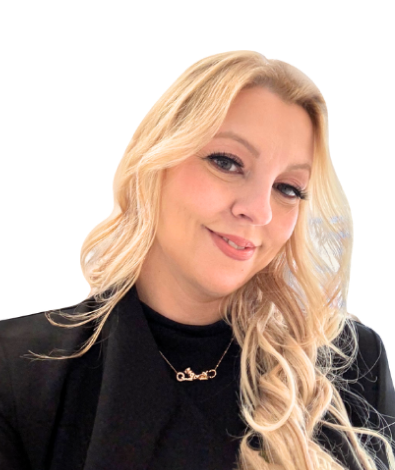
Nour AbochamaVice President of Operations, Qalitex Laboratories
Chemical engineer who has founded and sold three laboratories and a pharmaceutical company. 17+ years of experience in laboratory operations, quality assurance, and regulatory compliance. Master's in Biomedical Engineering from Grenoble INP – Ense3. Former Director of Quality at American Testing Labs and Labofine. Expert in FDA registration, Health Canada compliance, and ISO 17025 laboratory management. Executive Producer and co-host of the Nourify-Beautify Podcast.
خدمات الاختبار ذات الصلة
مجانًا: قائمة مراجعة اختبارات المكملات الغذائية
كل اختبار يحتاجه منتجك قبل طرحه في السوق — من الهوية والفاعلية إلى المعادن الثقيلة والأحياء الدقيقة.
تحميل القائمة المجانية →هل تحتاج إلى اختبارات مخبرية؟
احصل على عرض سعر من مختبرنا المعتمد بـ ISO 17025. نتائج خلال 48 ساعة.
احصل على عرض سعر →